
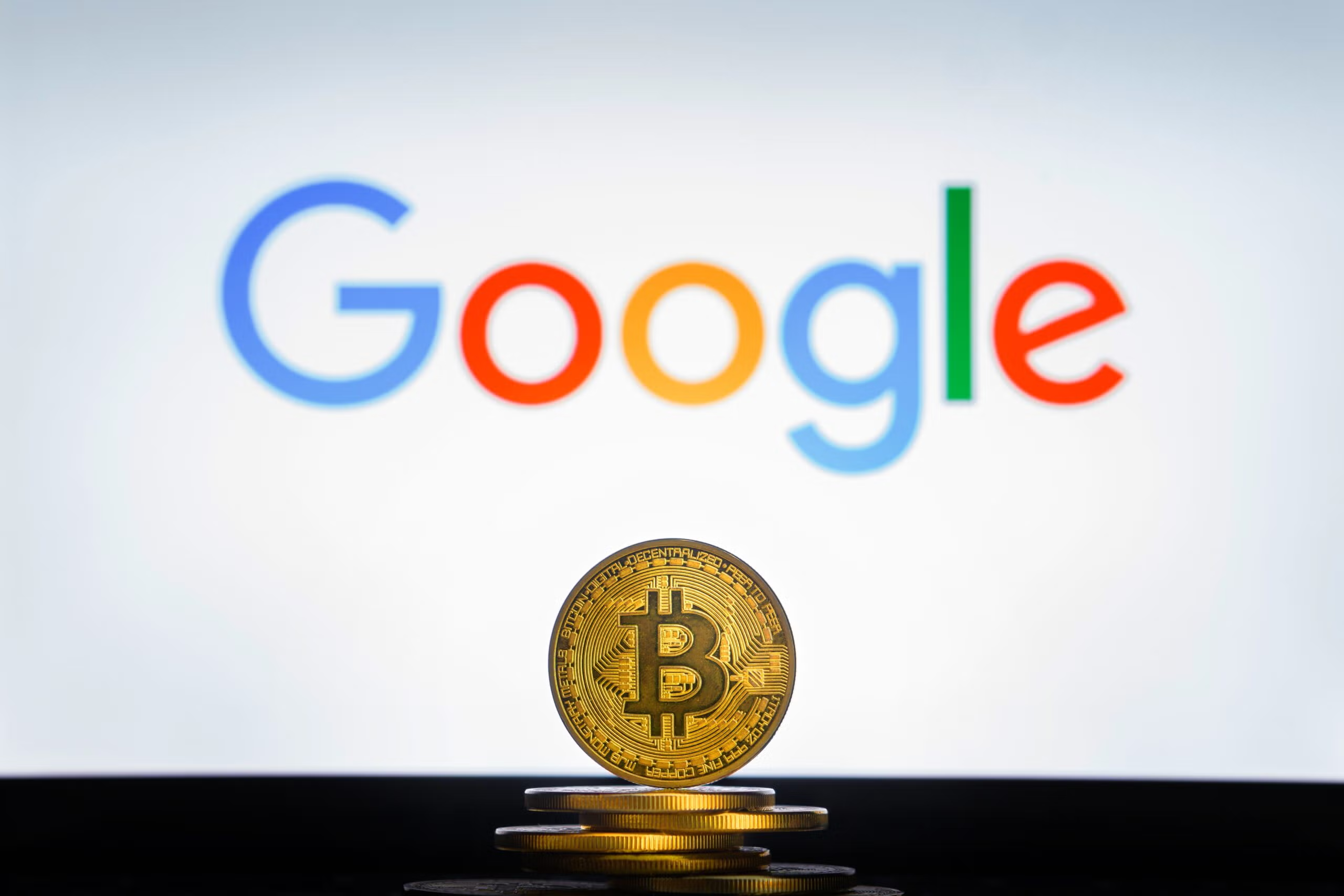
In April 2025, Bitcoin officially surpassed Google in market capitalization—a historic moment that reflects the changing face of global finance.

Bitcoin is an electronic currency created in 2009 by the pseudonymous figure Satoshi Nakamoto. The name is also associated with the open-source software he designed, which utilizes a peer-to-peer network without centralized storage or a single administrator.
The United States Department of the Treasury calls bitcoin a decentralized currency.
Unlike regular money, Bitcoin doesn’t require anyone to trust it. It utilizes a network of computers to track transactions and employs special codes to ensure security, such as verifying that only the owner of the Bitcoin can spend it.
The uncertain global geopolitical and economic situation forces us to prepare for the worst-case scenario immediately. Investing our money in the right investment scheme is one way.
The technology sector is the most sought-after in the modern era. Furthermore, the growing awareness of green energy sources and their health benefits has also begun to lead companies in these sectors to receive significant capital injections.
Despite volatility, Bitcoin remains one of the world’s most profitable assets—and in April 2025, it hit a new milestone. On April 23, 2025, the world’s first cryptocurrency officially surpassed Alphabet (Google’s parent company) in terms of assets with the largest market capitalization globally.
Bitcoin’s market cap is now a whopping US$1.87 trillion, making it the fifth most valuable asset in the world. It’s even bigger than big names like Amazon and Google, and even precious metals like silver!
This illustrates the significant growth in Bitcoin’s value and its increasing popularity as an investment in today’s financial landscape.
Why Bitcoin’s Price Surged in 2025
Over the past few months, Bitcoin’s price has increased significantly, reaching around US$93,000 to US$94,000. This increase was caused by several key factors that prompted people to buy more Bitcoin.
Here are the 10 biggest assets in the world by market cap as of April 2025:
- Gold – US$22.4 trillion
- Apple – US$3.87 trillion
- Nvidia – US$3.63 trillion
- Microsoft – US$3.13 trillion
- Bitcoin – US$1.87 trillion
- Alphabet (Google) – US$1.86 trillion
- Amazon – US$1.79 trillion
- Saudi Aramco – US$1.79 trillion
- Silver – US$1.70 trillion
- Meta Platforms – US$1.45 trillion
Bitcoin’s position, now above Google, Amazon, and silver, marks a significant shift in the global financial landscape, which technology companies and traditional commodities previously dominated.
3 Reasons Bitcoin Is Beating Google in 2025
Some key factors driving Bitcoin’s surge this year include:
- Institutional Adoption
With the SEC’s green light for Bitcoin ETFs, big banks and financial institutions are starting to invest in this digital gold. This has made Bitcoin more popular among regular investors who were previously hesitant about crypto.
- US Government Support
President Trump’s official statement regarding a national crypto reserve has been a breath of fresh air for the market. Support from a superpower like the US sends a strong signal that digital assets, such as Bitcoin, have been accepted as part of the future financial system.
- Protection from Inflation and Economic Uncertainty
With inflation on the rise and the global economy in turmoil, investors are seeking ways to safeguard their investments. Bitcoin, with its limited supply and decentralized nature, is becoming a popular choice among investors.
Bitcoin’s Future: Could it Reach $200,000?
Currently, Bitcoin is ranked fifth, but many experts believe it still has considerable room to grow. Some even predict that its price could reach $200,000 in the next few years, if more companies and governments start using it.
If this trend continues, Bitcoin could soon be worth more than tech giants like Microsoft and Nvidia, and potentially become the largest digital asset ever.
Meta description:
As of April 2025, Bitcoin surpasses Google in market capitalization to become the fifth-largest asset in the world. Here’s what’s driving its rise, and what could come next.