
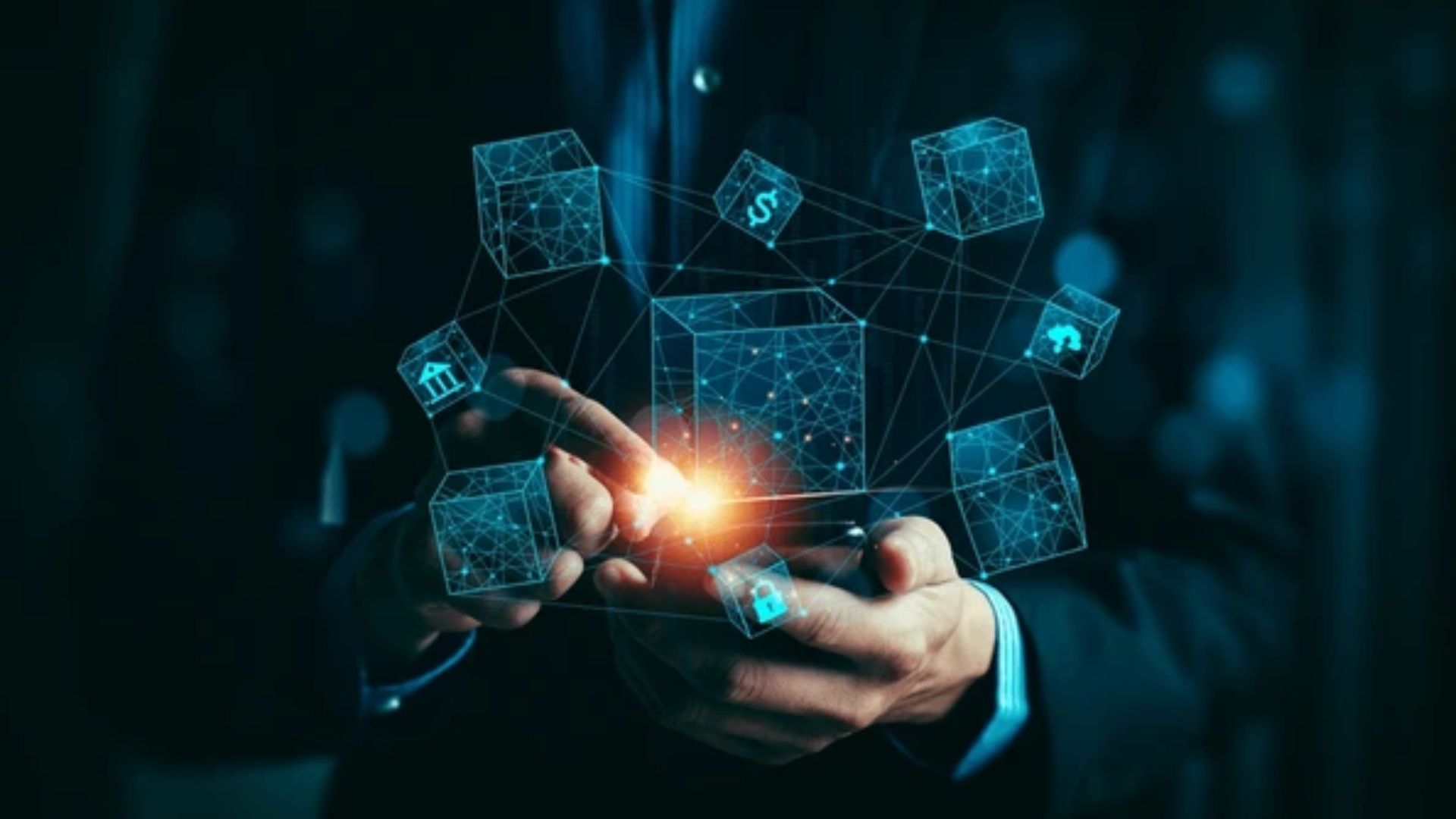

International Business Machines Corporation (IBM) defines blockchain as a shared, immutable digital ledger. Blockchain enables the recording of transactions and the tracking of assets within a business network through a single, reliable source of truth.
In its operation, each transaction is grouped into blocks that are then linked together in a transparent chain. This structure ensures data integrity and provides an immutable record. The technology is ideal for applications such as cryptocurrencies and supply chain management.
Blockchain is designed to help companies reduce the risk of fraud and data errors, making it well suited for industries where transactions are critical, including finance and healthcare.
Equally important, blockchain is designed to help businesses reduce costs by simplifying processes while improving accountability.
How Does Blockchain Work?

Blockchain consists of data blocks connected to form a digital chain. Information and data are stored in a decentralized, open-source environment where the information in each block can be verified by every participating computer.
Blockchain is built on decentralized, open-source management. This system differs from traditional centralized systems. With this structure, blockchain helps ensure trust, validity, and usability.
To this day, blockchain continues to evolve and is being innovatively adopted by various industries. For example, in the energy sector, companies use blockchain to create energy trading platforms and simplify access to renewable energy sources.
In the financial sector, blockchain services are used to manage online payments, accounts, and market trading. Meanwhile, companies in the media and entertainment industry use blockchain to manage copyrights and ensure fair compensation for artists.
One real-world example is Sony Music Entertainment Japan, which uses blockchain services to make digital rights management more efficient and reduce costs in copyright processing. Retail companies also frequently use blockchain to track the movement of goods between suppliers and buyers.
What Are the Features of Blockchain Technology?
Blocks in a blockchain consist of a number of transactions recorded in the form of hashes. The term hash refers to a unique address assigned to each block during its creation, and any further modification to the block will result in a change to its hash.
One of the main features of blockchain technology is immutability, meaning that blockchain is a permanent network that cannot be altered. Another key feature is distribution, which allows every participant to have a copy of the ledger, ensuring full transparency.
Next is decentralization, which means there is no central authority controlling the network. Instead, the network consists of a large number of nodes working together to verify and validate transactions. Another important feature is security, where security refers to blockchain records being individually encrypted.
There are also smart contracts, which are self-executing contracts that automatically run when certain conditions are met. Smart contracts have the potential to revolutionize various industries by providing a secure and transparent way to execute agreements.
Key Components of Blockchain Technology
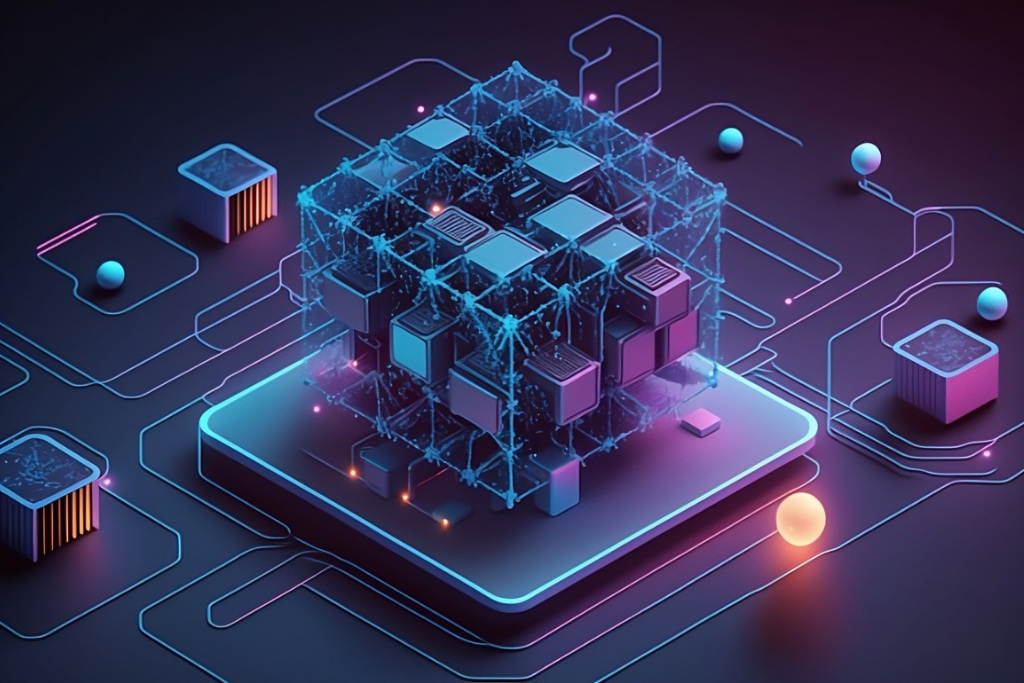
A blockchain network consists of various interdependent components that work together to ensure secure, transparent, and efficient data transactions. Key elements include nodes that validate and relay transactions.
Nodes are individual computers that participate in the blockchain network. Each node contains a copy of the entire blockchain data, or at least a portion of it.
In addition, the decentralized ledger records all activities, while consensus mechanisms maintain the integrity of the network. Consensus mechanisms are algorithms that allow the network to agree on the validity of transactions and maintain consistency across the ledger.
Supporting components of a blockchain network include cryptography, which secures transactions, protects data integrity, and preserves privacy within the blockchain network. Another component is smart contracts, which are executable agreements written in code and run on the blockchain.
Finally, there are tokens, which are digital assets created on a blockchain that represent various utilities, rights, or assets.