
Think the last few years were a wild ride? Buckle up. The 2020s, with their sudden AI explosion and global shake-ups, weren’t the main event. They were just the warm-up act. The decade ahead is poised to rewire the systems that underpin our entire world fundamentally.

This is no longer about small, incremental changes. We’re talking about massive, foundational disruptions in the very nature of intelligence, health, and energy. For anyone with money in the market, this can feel like standing in front of a tidal wave. It’s intimidating.
But here’s the thing about massive waves: you can either get swamped by them, or you can learn to ride them. The key isn’t to fear the disruption, but to understand the powerful, decade-long undercurrents that are causing it. Let’s examine the major ones.
The AI We Know Is Just the Beginning

The first wave is the one everyone is already watching, but its accurate scale is still hard to fathom. In the 2020s, AI has been something you “use”—a tool, a website, a novelty. In the 2030s, AI will become as ubiquitous as oxygen. It will be everywhere, in everything, and almost entirely taken for granted.
This “ambient intelligence” will automate not just factory floors, but entire office workflows. Think AI assistants running logistics for global companies, drafting legal documents, and creating personalized lesson plans for students. This level of automation will reshape entire industries.
So, where’s the smart money?
The prominent players are the companies designing these digital super-brains. But the “boring” (and often more profitable) money will be made on the picks and shovels. The 2030s will unleash an insatiable demand for computing power.
That means a relentless need for faster semiconductors, bigger data centers, and—the often-overlooked lynchpin—the clean energy infrastructure needed to power it all without melting the planet.
Hacking Our Biology

But while all eyes are on silicon chips, an arguably more profound revolution is quietly brewing inside our cells. Technologies that sounded like science fiction a decade ago—like CRISPR gene-editing and mRNA platforms—are hitting their stride. The 2030s will be the decade they move from the lab into the clinic on a massive scale.
And if that sounds a little abstract, think about what it means. It means shifting from merely managing chronic diseases to potentially curing them at the root cause level. It means cancer treatments designed for your specific DNA. Beyond just fighting sickness, a massive new industry will boom around “healthspan”—the science of helping people live not just longer, but healthier and more vibrant lives for longer. This is no longer just about medicine; it’s about upgrading human biology.
The investment angle here is at the red-hot intersection of tech and life science. It’s about the companies pioneering gene therapies and regenerative medicine, but it’s also about the tools they use. The use of AI to accelerate drug discovery is a significant aspect of this, reducing a decade-long process to one that can occur in months.
A Complete Rewiring of the Planet’s Energy

Here’s the thread that connects both of those revolutions: they run on energy—a LOT of it. At the same time, the global mandate to move away from fossil fuels will become an unavoidable economic reality in the 2030s.
This means we’re in for a complete overhaul of our energy grid. It’s not just about dotting the landscape with more solar panels and wind turbines. The real game-changer will be in energy storage. The companies that crack the code on affordable, efficient, and durable batteries—for cars, homes, and entire cities—will be the new energy titans.
This also demands a “smart grid” that can handle energy flowing in two directions, with millions of homes and electric vehicles both drawing power and sending it back. The investment opportunities here are vast, ranging from companies modernizing the grid to those mining and recycling critical minerals like lithium and copper, which form the bedrock of this new energy economy.
Okay, So How Do You Invest Without Losing Your Mind?
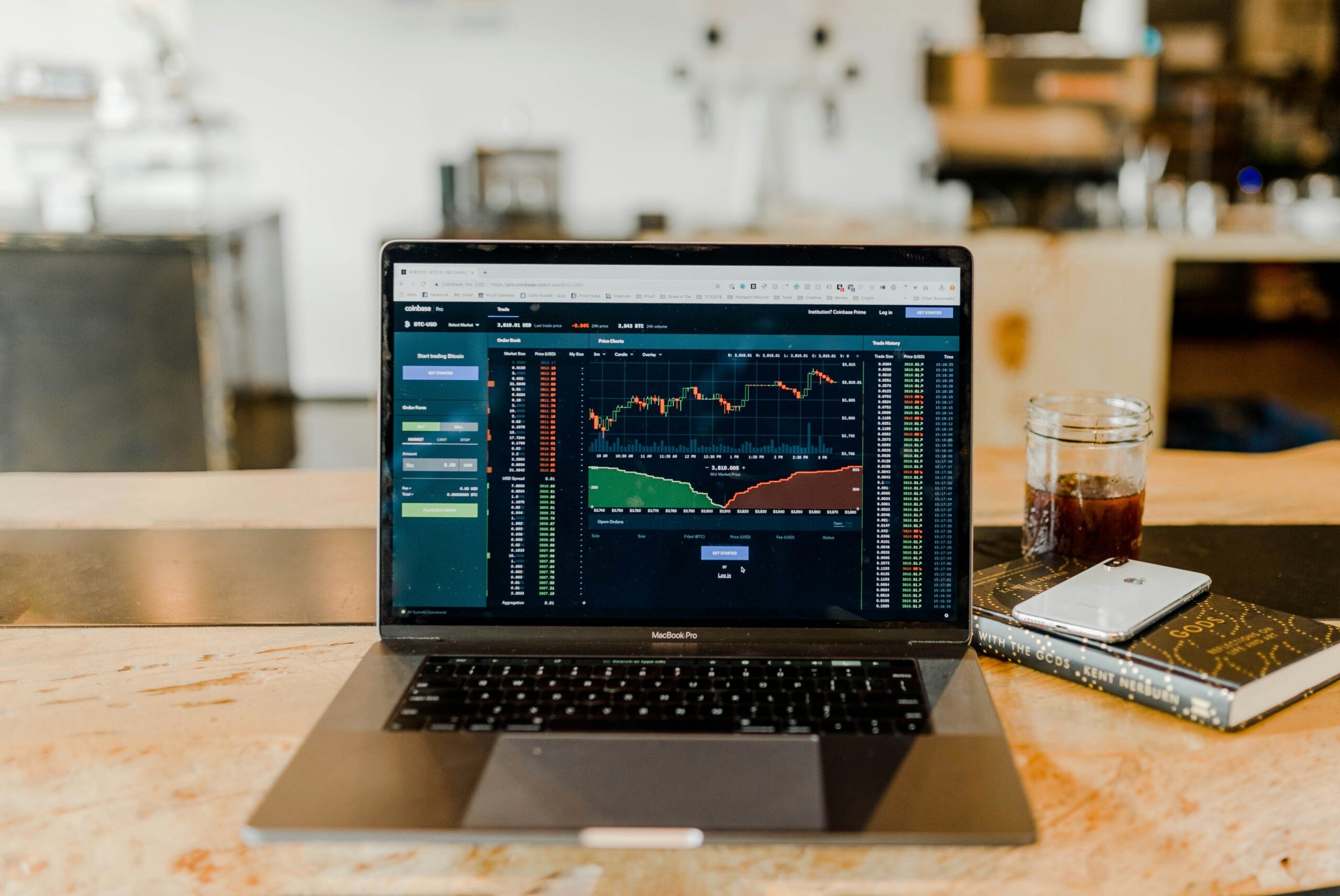
Reading about all this can feel vast and abstract. So how does a normal person approach it?
First rule: don’t try to be a hero. Attempting to pick the single winning biotech startup or battery company is a recipe for disaster. These are decade-long trends with lots of winners and even more losers. The more brilliant play is to bet on the trend itself.
This is why thematic ETFs (Exchange-Traded Funds) have gained popularity. They are essentially pre-made baskets of companies, all focused on a specific theme, such as robotics, genomics, or clean energy. It’s the simplest way to get exposure to these big ideas without needing a PhD in molecular biology to do your research.
And above all, this requires patience. These are not get-rich-quick schemes; they are slow-moving tectonic shifts.
The future isn’t about guessing the following hot stock. It’s about seeing which way the world is tilting and placing your bets accordingly. The disruptions are coming. The only question is whether you’ll be ready for them.